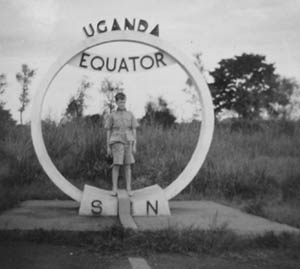
 Situated on the Equator, standing with one leg in each hemisphere.
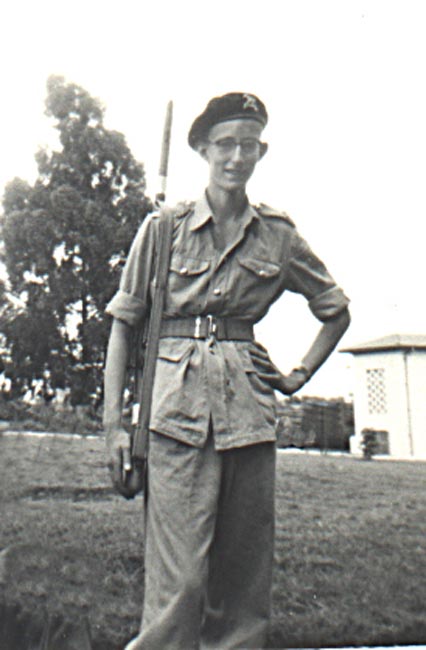
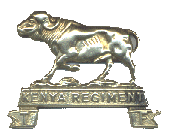 Originaly conscripted into the Kenya Regiment with unseemly haste, due to outbreak of hostilities in the Congo.

A group photograph of new intake into Kenya Regiment (I still have the hat I wore on this day)
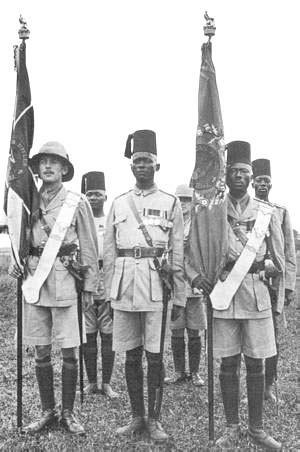
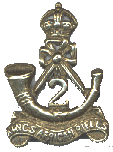 Seconded to the 4th Battalion King's African Rifles in Uganda where it was thought I could be more useful - this is what they looked like.
 |
 |
||
| Parade Uniform... and no - that isn't me in the picture. But that's what we looked like. On special occasions when there was a visiting dignitary, I got to wear a variant of this uniform in white, with long pants and a cascade of white feathers draped over the pith helmet |
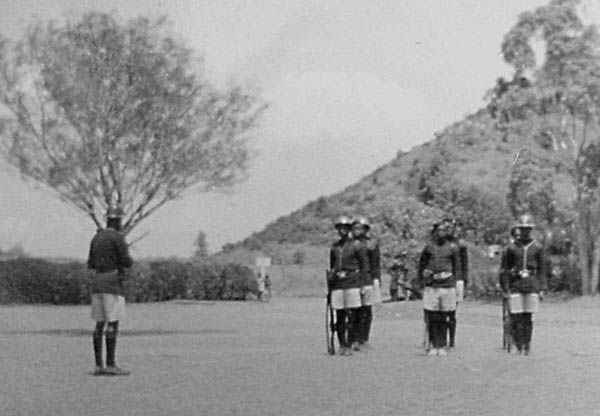
Active duty uniform - where most times the duties were more of a Police nature than military and the troops could opt for either a helmet or a beret
as they saw fit.
The "drill sergeant" in front left was Lance Corporal Deo Gratias, a fine brave man who saved my life. |
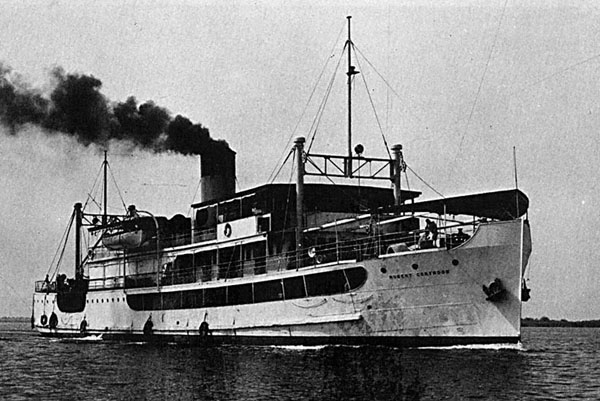 This is the S.S. Robert Coryndon which plied Lake Albert on the border between Uganda and The Congo. It also featured in the movie "The African Queen" as the
German Vessel "Königin Louise".
This is the S.S. Robert Coryndon which plied Lake Albert on the border between Uganda and The Congo. It also featured in the movie "The African Queen" as the
German Vessel "Königin Louise".
On the outbreak of hostilities within a few days after The Congo got its independence, Her Brittanic Majesty commanded her forces in East Africa to commandeer this vessel and use it to evacuate refugees fleeing the Congo and waiting on the far shore. Accordingly, a platoon from the Kings African Rifles was dispatched to wake the captain (who was sleeping off a terrible hangover) and "persuade" him to set steam and proceed with all speed. Armed with twelve rifles and one light machine gun, the platoon provided any necessary armaments in case hostilities should break out when we "invaded" The Congo. The Captain of the ship (Jock was his name) and his engine-room crew agreed to "drive this bloody boat" if we insisted - which we did.
This was my first and only Naval command. It covered four separate voyages - each retrieving between 300 and 400 evacuees.
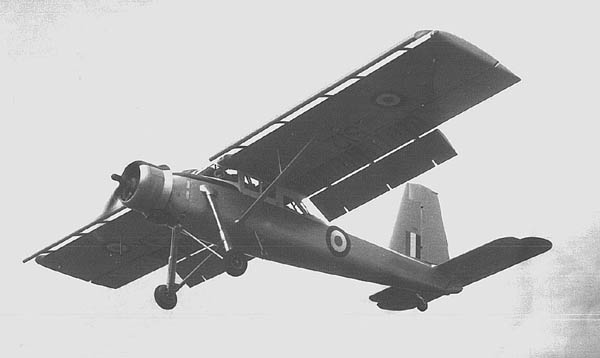 This aircraft is a "Scottish Aviation Pioneer". This is the single-engined Pioneer, not to be confused with the "Twin-pin"
which was a totally different aircraft. Powered by a big mutha radial engine (an Alvis Leonides) it was the functional replacement of the Lysander of WWII fame. It was a STOL
(short take-off and landing) and used for reconnaissance and close-support activities. First used by the RAF in the early 1950's, it saw service through almost the early 1970's. Apparently only
one is left today and is being restored for/by a museum in Britain. It is expected to be ready for display some time in 2005.
The particular planes in our squadron initialy saw service against the communist insurgents in Borneo and Malaya as well as the unpleasantness in Aden before
being eventualy assigned to our air wing.
This aircraft is a "Scottish Aviation Pioneer". This is the single-engined Pioneer, not to be confused with the "Twin-pin"
which was a totally different aircraft. Powered by a big mutha radial engine (an Alvis Leonides) it was the functional replacement of the Lysander of WWII fame. It was a STOL
(short take-off and landing) and used for reconnaissance and close-support activities. First used by the RAF in the early 1950's, it saw service through almost the early 1970's. Apparently only
one is left today and is being restored for/by a museum in Britain. It is expected to be ready for display some time in 2005.
The particular planes in our squadron initialy saw service against the communist insurgents in Borneo and Malaya as well as the unpleasantness in Aden before
being eventualy assigned to our air wing.
Note the presence of both conventional flaps as well as leading slats on the wings - giving it extraordinary lifting power as well as slow-speed capabilities. It could land as
well as take off on a standard soccer field (diagonaly of course to avoid the goal posts) - providing there was at least a moderate breeze coming out of the right quarter.
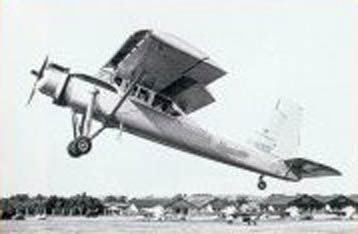 This isn't a very good picture (it was taken with a Minox camera using 8mm film) but it shows a certain pilot qualifying for an extreme "short field landing".
Airspeed at this point is hovering around 33 knots and ground speed slightly less (due to a slight headwind)
This isn't a very good picture (it was taken with a Minox camera using 8mm film) but it shows a certain pilot qualifying for an extreme "short field landing".
Airspeed at this point is hovering around 33 knots and ground speed slightly less (due to a slight headwind)
I had to do this trick a couple of times "for real" under very trying circumstances - as well a take off again with a load that was estimated to be about 15% over the rated maximum for that altitude and temperature.
Due to the success of these missions I received simultaneously a bollocking (for flying outside the performance envelope) and a commendation for mission(s) accomplished with no lives lost.
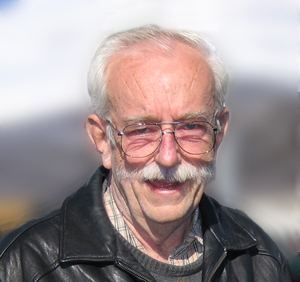
Subsequent to this I embarked on a completely different and safer career path which led me eventualy to Silicon Valley and R&D into the design and use of some of the world's fastest computers. This is me today (retired but still very busy)